
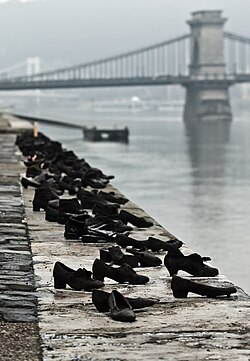
Pauer Gyula és Can Togay János alkotása
Arnold Schönberg 1874-ben született Bécsben. 1933-ban az USA-ba emigrált. "Rendszeres zenei tanulmányokat nem folytatott, szinte mindent a maga erejéből tanult meg. Talán ezért lett a 20. század legnagyobb hatású zeneszerzés-tanára." (Kovács Sándor)
Első művei áradóan dallamosak: Megdicsőült éj (Op. 4-es vonóshatos, 1899, programzene R. Dehmel azonos című versére, melynek kerete: "Két ember lépked a kihalt, hideg erdőben, velük halad a hold, ők fel-felnéznek rá. ...Két ember lépked a magas, fénylő éjszakában" Fenyő Gábor nyersfordítása)
Az Op. 46-os, 1947-ben írt mű címe: A survivor of Warsaw (Egy varsói menekült/túlélő) kantáta. Eredeti nyelve angol, kivéve az őrmester porosz dialektusban idézett kiabálását illetve a héber imát.
Az angol és német szöveg nyersfordításából idézünk:
" Nem emlékszem mindenre, hisz sokáig eszméletlen lehettem. De emlékszem arra a grandiózus pillanatra, amikor mindannyian énekelni kezdték a régi könyörgést, melyet oly sok évig elhanyagoltunk. Az elfeledett hitvallást - mintha csak előre megbeszélték volna. Nem tudom, hogyan jutottam a föld alá, hogy Varsó csatornáiban éljek sokáig.
A nap a szokásos módon kezdődött.Ébresztő, még a sötétben. Mars ki, akár aludtál, akár ébren gyötrődtél egész éjszaka, mert elszakítottak gyerekeidtől, szüleidtől, feleségedtől, nem tudtad, mi lehet velük- hogy is lehet így aludni? Újra a kiáltás: mars ki, az őrmester dühös lesz. Jönnek néhányan, öregek, betegek lassan, mások ideges gyorsasággal. Rettegnek az őrmestertől, sietnek, ahogy bírnak. Hiába. Túl nagy a zaj a felbolydulás, és nem elég gyorsak. Az őrmester üvölt: Figyelem! Vigyázz! Na mi lesz, segítsünk a puskatussal? Na jó, ha mindenáron ezt akarjátok!!!
Az őrmester és katonái mindenkit vertek. Fiatalokat, öregeket, erőseket, betegeket. Iszonyú volt hallani a jajgatást.
Engem is nagyon megvertek, annyira, hogy összeestem. Aki nem tudott felállni, azt fejbeverték. Elájultam. Arra tértem magamhoz, hogy az egyik katona mondja: mind meghaltak.
Erre az őrmester parancsot adott, hogy vigyenek el minket. Ott feküdtem oldalt, félig öntudatlanul. Nagy csend lett. Félelem és fájdalom. Megszámolni! - ordított az őrmester. Ők pedig elkezdték, lassan, szabálytalanul: egy, kettő, három, négy. Egy percen belül hallani akarom, hányat viszek a gázkamrába! Megint kezdték, lassan: Egy, kettő, három, négy. Aztán egyre gyorsabban, végül már úgy hangzott, mint szilaj paripák száguldása. S egyszercsak felharsant a Sömá Jiszroél."
A Smá Jiszraél a zsidó közösség legfontosabb imája, szövege a Tórából való. (Tudatosan írtam az ima címének átírását kétféleképpen.)
HEAR, O ISRAEL: THE LORD IS OUR GOD! THE LORD IS ONE.
I cannot remember
everything. I must have been unconscious most of the time.
I remember only the grandiose moment when they all started to sing, as if prearranged, the old prayer they had neglected for so many years - the forgotten creed!
But I have no recollection how I got underground to live in the sewers of Warsaw for so long a time.
The day began as usual: Reveille when it still was dark. "Get out!" Whether you slept or whether worries kept you awake the whole night. You had been separated from your children, from your wife, from your parents. You don't know what happened to them... How could you sleep?
The trumpets again - "Get out! The sergeant will be furious!" They came out; some very slowly, the old ones, the sick ones; some with nervous agility. They fear the sergeant. They hurry as much as they can. In vain! Much too much noise, much too much commotion! And not fast enough! The Feldwebel shouts: "Achtung! Stilljestanden! Na wird's mal! Oder soll ich mit dem Jewehrkolben nachhelfen? Na jut; wenn ihrs durchaus haben wollt!"
The sergeant and his subordinates hit (everyone): young or old, (strong or sick), quiet, guilty or innocent ...
It was painful to hear them groaning and moaning.
I heard it though I had been hit very hard, so hard that I could not help falling down. We all on the (ground) who could not stand up were (then) beaten over the head...
I must have been unconscious. The next thing I heard was a soldier saying: "They are all dead!" Whereupon the sergeant ordered to do away with us.
There I lay aside half conscious. I had become very still - fear and pain. Then I heard the sergeant shouting: „Abzählen!“
They start slowly and irregularly: one, two, three, four - "Achtung!" The sergeant shouted again, "Rascher! Nochmals von vorn anfange! In einer Minute will ich wissen, wieviele ich zur Gaskammer abliefere! Abzählen!“
They began again, first slowly: one, two, three, four, became faster and faster, so fast that it finally sounded like a stampede of wild horses, and (all) of a sudden, in the middle of it, they began singing the Shema Yisroel.
I remember only the grandiose moment when they all started to sing, as if prearranged, the old prayer they had neglected for so many years - the forgotten creed!
But I have no recollection how I got underground to live in the sewers of Warsaw for so long a time.
The day began as usual: Reveille when it still was dark. "Get out!" Whether you slept or whether worries kept you awake the whole night. You had been separated from your children, from your wife, from your parents. You don't know what happened to them... How could you sleep?
The trumpets again - "Get out! The sergeant will be furious!" They came out; some very slowly, the old ones, the sick ones; some with nervous agility. They fear the sergeant. They hurry as much as they can. In vain! Much too much noise, much too much commotion! And not fast enough! The Feldwebel shouts: "Achtung! Stilljestanden! Na wird's mal! Oder soll ich mit dem Jewehrkolben nachhelfen? Na jut; wenn ihrs durchaus haben wollt!"
The sergeant and his subordinates hit (everyone): young or old, (strong or sick), quiet, guilty or innocent ...
It was painful to hear them groaning and moaning.
I heard it though I had been hit very hard, so hard that I could not help falling down. We all on the (ground) who could not stand up were (then) beaten over the head...
I must have been unconscious. The next thing I heard was a soldier saying: "They are all dead!" Whereupon the sergeant ordered to do away with us.
There I lay aside half conscious. I had become very still - fear and pain. Then I heard the sergeant shouting: „Abzählen!“
They start slowly and irregularly: one, two, three, four - "Achtung!" The sergeant shouted again, "Rascher! Nochmals von vorn anfange! In einer Minute will ich wissen, wieviele ich zur Gaskammer abliefere! Abzählen!“
They began again, first slowly: one, two, three, four, became faster and faster, so fast that it finally sounded like a stampede of wild horses, and (all) of a sudden, in the middle of it, they began singing the Shema Yisroel.

Nincsenek megjegyzések:
Megjegyzés küldése
Megjegyzés: Megjegyzéseket csak a blog tagjai írhatnak a blogba.